What Are Two Questions That Smart Spenders Ask Before Making a Purchase?
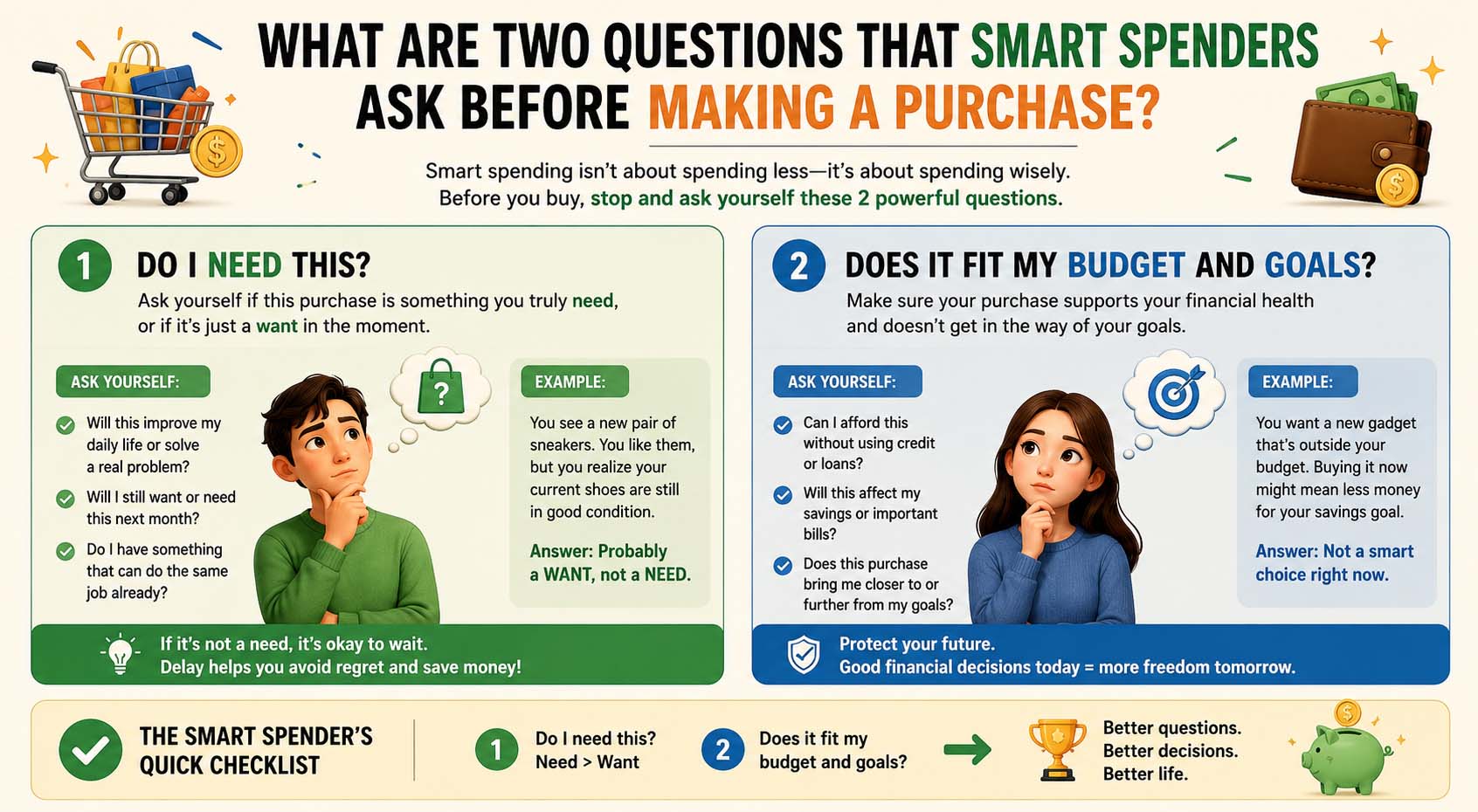
Understanding what are two questions that smart spenders ask before making a purchase can help people make more thoughtful financial decisions. The two key questions are: “Do I really need this purchase?” and “Is this purchase worth the cost?” Together, these questions help buyers separate needs from wants, evaluate value, and avoid spending money simply because a deal or advertisement creates pressure to buy.
Smart spending matters in personal finance as well as business. Consumers constantly encounter online deals, advertisements, subscriptions, and limited-time offers. Therefore, taking a moment to evaluate a purchase can make it easier to stay within a budget and focus on longer-term financial priorities.
Why Smart Spenders Ask Questions Before Making a Purchase
Smart spending is not simply about choosing the cheapest option. Instead, it means using available money thoughtfully and deciding whether a purchase supports your needs and financial goals.
In business, unnecessary spending can reduce available cash and limit money for other priorities. On a personal level, repeated unplanned purchases can make it harder to save or stay within a budget.
The Consumer Financial Protection Bureau’s guidance on managing spending also explains how consumers manage spending within their budgets. Therefore, comparing a potential purchase with your budget before paying can support better decision-making.
Modern consumers also face pressure from social media promotions, online advertisements, and limited-time offers. However, a discount does not automatically make an item necessary or valuable.
This is why asking the right questions before purchasing can become a useful financial habit. In addition, What Is Retail can help explain the environment in which many consumer purchases occur.
What Are Two Questions That Smart Spenders Ask Before Making a Purchase?
The two questions are straightforward:
- Do I really need this purchase?
- Is this purchase worth the cost?
The first question focuses on necessity. Meanwhile, the second focuses on value.
Together, they create a simple framework that works for everyday shopping, subscriptions, technology, business equipment, and other spending decisions.
For example, a buyer may genuinely need a new laptop. However, that does not mean the most expensive available model offers the best value for that person’s needs.
Knowing what are two questions that smart spenders ask before making a purchase also creates a useful pause before an emotional buying decision. Instead of focusing only on the product, buyers can consider whether spending the money makes sense for them.
First Smart-Spending Question: Do I Really Need This Purchase?
The first question helps buyers separate a genuine need from a temporary want.
Many purchases happen because something looks attractive at that moment. For example, someone may see a discounted smartphone online and feel tempted to buy it even though the current device still meets their needs.
Instead of buying immediately, a smart spender can ask whether the new product solves a real problem.
This does not mean people should never buy things they simply want. Rather, the question encourages buyers to recognize whether they are making a necessary purchase or choosing discretionary spending.
Business owners can use the same process. Before purchasing expensive software or equipment, they can determine whether the investment supports an actual operational need.
In addition, What Is Procurement can help businesses understand structured purchasing and supplier-related decisions.
As a result, this first question can reduce unnecessary purchases and make spending more intentional.
Second Smart-Spending Question: Is This Purchase Worth the Cost?
Once a buyer decides that a purchase has a purpose, the next step is evaluating its value.
Price and value are not always the same thing. For instance, the cheapest product may cost less today but require frequent replacement. On the other hand, a higher-priced product does not automatically provide better value.
Therefore, buyers should consider factors such as:
- Expected usefulness
- Quality
- Durability
- Ongoing costs
- Available alternatives
- How often they will use it
A business owner might compare several pieces of equipment based on price, expected use, maintenance requirements, and suitability. Likewise, a consumer can apply the same approach to clothing, electronics, subscriptions, or services.
The goal is not simply to spend less. Instead, the goal is to decide whether the expected benefit justifies the cost.
How Smart Spenders Make Better Purchase Decisions
People who understand what are two questions that smart spenders ask before making a purchase can use them as a checkpoint before spending money. Asking whether something is needed and whether it offers enough value creates a pause between wanting an item and purchasing it.
That pause can be useful because buying decisions sometimes happen quickly. For example, an advertisement may create urgency through a countdown timer or short-term discount.
However, the two-question method shifts attention back to the buyer’s own needs and finances.
The process works like this:
- Identify the item or service.
- Ask whether you genuinely need or want it enough to justify spending.
- Decide whether its benefits justify its total cost.
- Compare alternatives when appropriate.
- Check whether the purchase fits your available budget.
- Buy only when the decision still makes sense.
As a result, buyers can evaluate purchases based on their circumstances rather than promotional pressure.
Smart-Spending Questions in a Real-World Example
Imagine a small business owner considering a new office printer that costs significantly more than the company’s current model.
Instead of purchasing immediately, the owner asks:
- Do we truly need a new printer right now?
- Is this model worth the price compared with alternatives?
First, the owner reviews current printing needs. If the existing printer frequently fails or no longer handles the required workload, replacing it may solve a genuine business problem.
Next, the owner compares suitable alternatives. Factors such as purchase price, maintenance needs, supplies, expected usage, and available features can affect the decision.
Moreover, understanding What Is a Vendor can help a business evaluate companies offering products or services.
Consumers can use the same method. For example, before purchasing expensive clothing, electronics, or a new subscription, they can consider actual usage and long-term value.
Therefore, the same basic framework can support both personal and business spending.
Needs vs. Wants Before Buying
Understanding the difference between needs and wants makes the first question easier to answer.
A need usually supports an essential requirement or solves a genuine problem. A want may improve comfort, convenience, entertainment, or enjoyment but is not essential.
However, the distinction is not always absolute.
For example, a computer may be essential for someone’s job but optional for another person who already owns a suitable device. Therefore, smart spending depends partly on individual circumstances.
The purpose of the question is not to eliminate wants. Instead, it helps buyers recognize what kind of purchase they are considering before they spend.
Value vs. Price in Smart Spending
The second smart-spending question requires buyers to think beyond the price tag.
For example, consider two products:
- Product A costs less but may need replacement sooner.
- Product B costs more but may provide greater usefulness for the buyer’s specific needs.
The cheaper product is not automatically the better choice. Likewise, the expensive product does not automatically provide better value.
Instead, value depends on what the buyer receives for the money spent.
Therefore, comparing features, expected use, quality, and ongoing costs can help buyers make a more informed decision.
How Marketing Influences Purchase Decisions
Marketing can influence how quickly consumers make purchasing decisions.
Common techniques include:
- Limited-time discounts
- Flash sales
- Countdown timers
- Exclusive offers
- Influencer promotions
- Free-shipping thresholds
These methods can make an offer feel urgent. However, urgency does not change whether the buyer needs the product or whether it offers suitable value.
For example, a 40% discount still requires spending money. If the buyer would not otherwise want or need the product, the discount alone may not make the purchase worthwhile.
Therefore, smart-spending questions can help consumers evaluate the offer rather than reacting only to the promotion.
Smart Spending Strategy Before Making a Purchase
Building better spending habits takes practice. Fortunately, buyers can use a simple process before making purchases.
Step 1: Pause Before Buying
First, avoid making an immediate purchase when there is no genuine need for speed.
A short pause gives you time to evaluate the decision rather than responding automatically to a promotion.
Step 2: Ask Whether You Need It
Next, identify the purpose of the purchase.
Ask whether the item solves a problem, meets a need, or provides enough personal value to justify spending money on it.
Step 3: Compare Your Options
Then, compare suitable alternatives when the purchase is significant enough to justify research.
Consider price, quality, usefulness, and other relevant differences.
Step 4: Consider Long-Term Value
Next, think beyond the initial price.
For example, maintenance costs, recurring subscriptions, accessories, financing charges, or replacement needs may affect the real cost.
Step 5: Check Your Budget
Finally, determine whether the purchase fits your current financial plan.
An item can offer good value and still be unsuitable if purchasing it would interfere with essential expenses or other financial priorities.
Smart Spending for Entrepreneurs and Businesses
Entrepreneurs regularly make purchasing decisions involving software, equipment, suppliers, marketing, and professional services.
Therefore, smart spending can support effective resource management.
Before approving an expense, a business owner can ask whether the purchase solves a current business need. Next, the owner can evaluate whether the expected benefit justifies the cost.
For example, a new software subscription may promise useful features. However, if the company already has another tool that performs the necessary functions, adding a second subscription may create unnecessary expense.
On the other hand, paying more for a tool that saves meaningful time or solves an operational problem may offer better value.
As a result, the same two-question framework can support more deliberate business purchasing.
Common Smart-Spending Mistakes
Even people who know what are two questions that smart spenders ask before making a purchase can make mistakes when urgency, emotion, or social pressure influences the decision.
Buying Because Something Is on Sale
A discount reduces the price, but it does not create a need.
Therefore, ask whether you would still want the item if the promotional message disappeared.
Ignoring Ongoing Costs
Some products create costs after the initial purchase.
For example, subscriptions, maintenance, replacement parts, financing charges, and accessories can increase the total amount spent.
Buying Because of Social Pressure
People may feel pressure to purchase certain brands or products because friends, influencers, or colleagues use them.
However, another person’s priorities may not match your own.
Choosing Only by Price
The cheapest option may not provide the best value.
Instead, compare what each option offers and how well it meets your actual needs.
How Businesses Can Encourage Smarter Purchases
Businesses can support informed purchasing by giving customers clear information about products, prices, features, and terms.
Transparent information makes it easier for buyers to decide whether an offer suits their needs.
In addition, What Is a Merchant can help explain the role of a business or individual selling goods and services.
A customer who understands a product before purchasing may also have more realistic expectations about what it provides.
Moreover, What Is Consultative Selling explains a customer-focused sales approach built around understanding needs.
Therefore, helping customers evaluate suitability can support a more informed buying process.
Smart-Spending Checklist
Before completing a purchase, ask yourself:
- Do I genuinely need or want this enough to justify the expense?
- Is the product or service worth its total cost?
- Does it fit my budget?
- Have I compared reasonable alternatives?
- Are there ongoing or hidden costs?
- Am I buying because of genuine value or temporary pressure?
- Will this purchase interfere with a more important financial goal?
You do not need to complete a lengthy analysis for every small purchase. However, the more expensive or financially significant the decision becomes, the more useful this checklist can be.
Frequently Asked Questions About Purchase Decisions
What Questions Should Smart Spenders Ask First?
The two most useful questions are whether you genuinely need the purchase and whether it provides enough value to justify its cost.
Together, these questions encourage buyers to evaluate necessity and value before spending.
Why Do Smart Spenders Pause Before Buying?
A pause creates time to evaluate a purchase instead of reacting immediately.
As a result, buyers have an opportunity to consider whether the item meets a genuine need or want and whether the expected benefit justifies the cost.
Can Businesses Use Smart-Spending Questions?
Yes. Businesses can evaluate whether an expense solves a real operational need and whether its expected value justifies the cost.
This approach can apply to equipment, software, suppliers, marketing services, and many other business expenses.
How Can I Improve My Spending Habits?
Start by pausing before nonessential purchases.
Then, compare the purchase with your budget, evaluate alternatives, consider total cost, and decide whether it supports your priorities.
Is Smart Spending the Same as Being Cheap?
No. Smart spending focuses on value and financial priorities rather than always choosing the lowest price.
Sometimes spending more on a suitable product makes sense. In other situations, delaying or avoiding the purchase may be the better decision.
Final Thoughts on Smarter Buying
The answer to what are two questions that smart spenders ask before making a purchase is simple: Do I really need this purchase? and Is this purchase worth the cost?
These questions encourage buyers to consider necessity, value, budget, and alternatives before spending. Therefore, they can help consumers and business owners make more deliberate purchasing decisions.
The goal is not to avoid spending altogether. Instead, smart spending means using money in ways that match your needs, priorities, and available resources.